Knit dress manufacturer
Custom women's knit dresses, made in Guangzhou
EtrenerKnit develops and manufactures women's knit dresses for fashion labels and wholesale buyers. Custom dresses are developed and made to order for your brand, either from your own design (OEM) or built with our team (ODM). Custom dress orders start at 50 pieces per style, confirmed in your quote.
This page covers the dress types we work with, how knit dresses are constructed, the decisions that change how a dress looks and wears, how to write a brief and what to check on a sample.
Knit dress styles
to build your range around
Short answer: we work on seamless, rib and sweater dresses, in lengths from mini to maxi and in fitted, relaxed and tailored shapes. The list below shows the dress types already on our collection reference pages. If your style is not listed, describe it in your brief.
- Construction-led
Seamless knit dresses
Knitted as one piece with no side seams, which gives a smooth, close feel against the body. A common choice for fitted and bodycon shapes.
- Texture-led
Rib knit dresses
Rib structures stretch and recover, so they suit fitted and semi-fitted shapes and give clear vertical texture to the surface.
- Cold-season
Sweater dresses
Heavier, relaxed knits, usually in wool-based yarns, for autumn and winter ranges. Often styled with boots, tights or a belt.
- Length-led
Midi and maxi dresses
Longer lengths, where the way the knit hangs matters most. See the notes on weight and recovery further down this page.
- Fit-led
Bodycon and slip dresses
Close-fitting, slimmer shapes where stretch, rib and neckline finishing do most of the work.
- Detail-led
Polo and shirt dresses
Collars and plackets that bring a more tailored look to the comfort of knit.
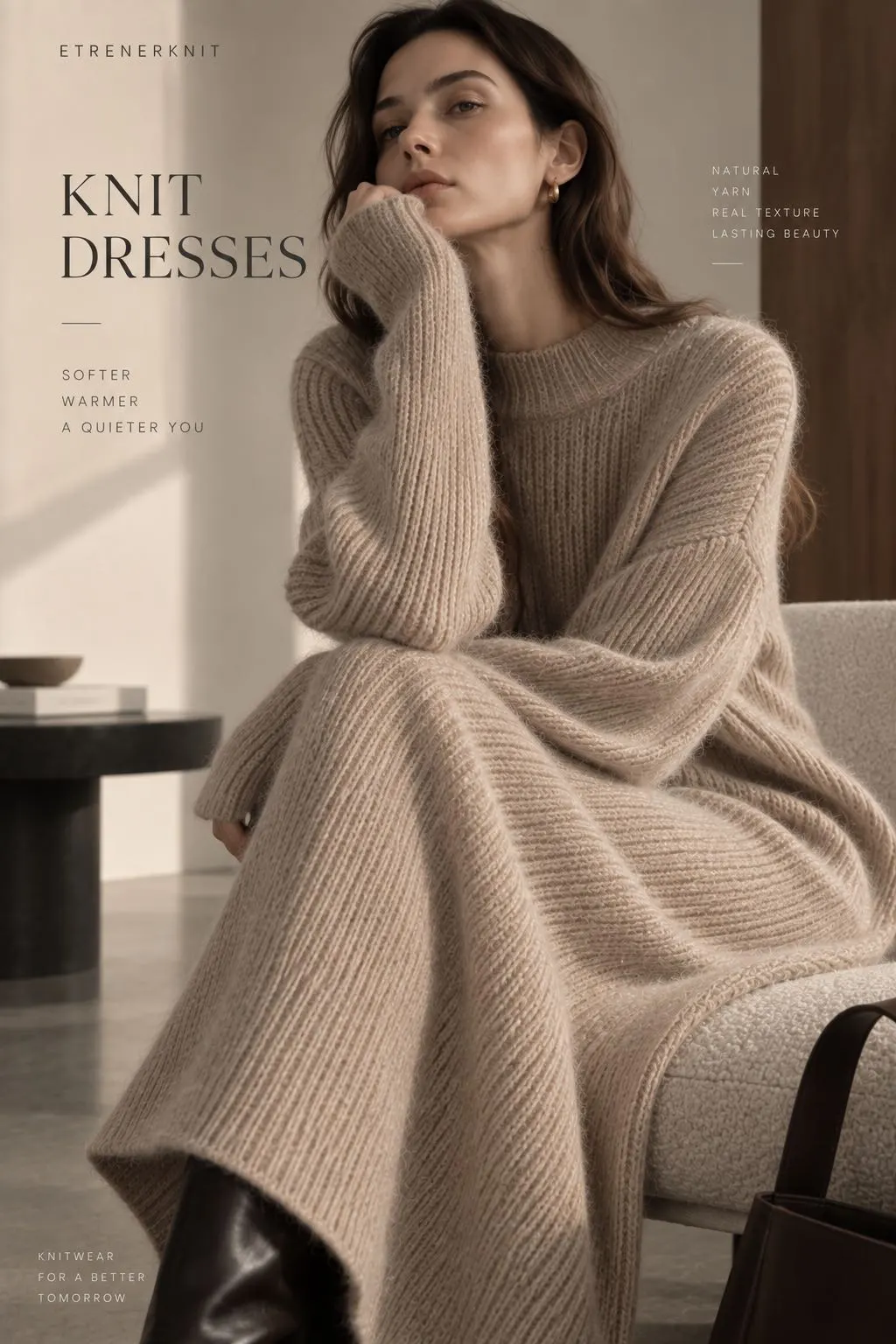
Developed for
your brand, not off the rack
Custom knit dresses are not stock items. Each style is developed around your brief, so the silhouette, yarn, stitch and finishing reflect what your customer expects from your label.
Dresses are made at our factory in Guangzhou, with more than 100 Shima Seiki units and 1,000 skilled workers. That is why we ask for the full picture at the start: a dress that looks right on a sketch can behave very differently once it is knitted in a particular yarn at a particular gauge. The sections below explain the choices that matter most.
How a knit dress
is constructed
Short answer: a knit dress is either knitted as a single piece (seamless, or whole-garment, knitting) or knitted as shaped panels that are then joined together (fully-fashioned). The method affects fit, finish and what shaping is practical, so it is one of the first things to settle for each style.
| Construction | How it works | Typically suits |
|---|---|---|
| Seamless (whole-garment) knitting | The machine knits the dress in one piece, with no side seams to sew afterwards. | Smooth, close-fitting styles where seam-free comfort is part of the appeal |
| Fully-fashioned knitting | Panels are knitted to shape by adding and reducing stitches, then joined by linking or sewing. | Structured shaping, sleeve and neckline detail, and cleaner tailored lines |
Which method suits your dress depends on the silhouette, yarn and gauge. We confirm the construction for each style once we have reviewed your brief, rather than promising one method for every design. For a machine maker's own explanation of seam-free knitting, see Shima Seiki's page on WHOLEGARMENT knitting.
What shapes
how a knit dress looks and wears
Knit dresses fail in predictable ways: they drop at the hem, stretch out at the waist, lose their neckline or show through in light colours. Most of these problems are decided in the brief, so it helps to specify the following up front.
| Decision | Why it matters | What to tell us |
|---|---|---|
| Length and weight | A long knit carries its own weight and can drop over time. Heavier yarns and denser structures change how much. | Target length for your size range, and how heavy you want the dress to feel |
| Stretch and recovery | Stitch structure and yarn content decide how far a dress stretches and how well it returns to shape after wear. | Fit intent: close to the body, relaxed or oversized |
| Stitch pattern | Rib, pointelle, cable, jacquard and open-work stitches each change the look, thickness and stretch of the fabric. | A reference photo or swatch of the surface you want |
| Neckline, sleeves and back | Edges and openings are where fit problems show first, particularly on fitted dresses. | Neckline shape, sleeve length and any back or cut-out details |
| Opacity and lining | Fine knits and light colours can show through. A lining adds opacity but also changes the feel. | Whether you want a lined dress, and in which colours |
Stitch type changes both the look and the properties of knit fabric. Britannica's overview of weft knitting describes the basic plain and rib stitches.
Two choices that set
the feel of the dress
Yarn decides warmth, softness and drape, and it sets much of the price. We source wool, merino and cashmere blends, among other fibres. The knitwear yarn options page explains the choices in more detail. For one example, Woolmark's guide to merino wool explains why fine merino feels soft against the skin.
Gauge is the number of needles per inch on the knitting machine, written as GG. A higher gauge means finer needles and a finer, lighter fabric; a lower gauge gives a chunkier, heavier one. Gauge also affects knitting time and cost, which is why it appears in the brief. Read how gauge changes the look, feel and cost before you choose.
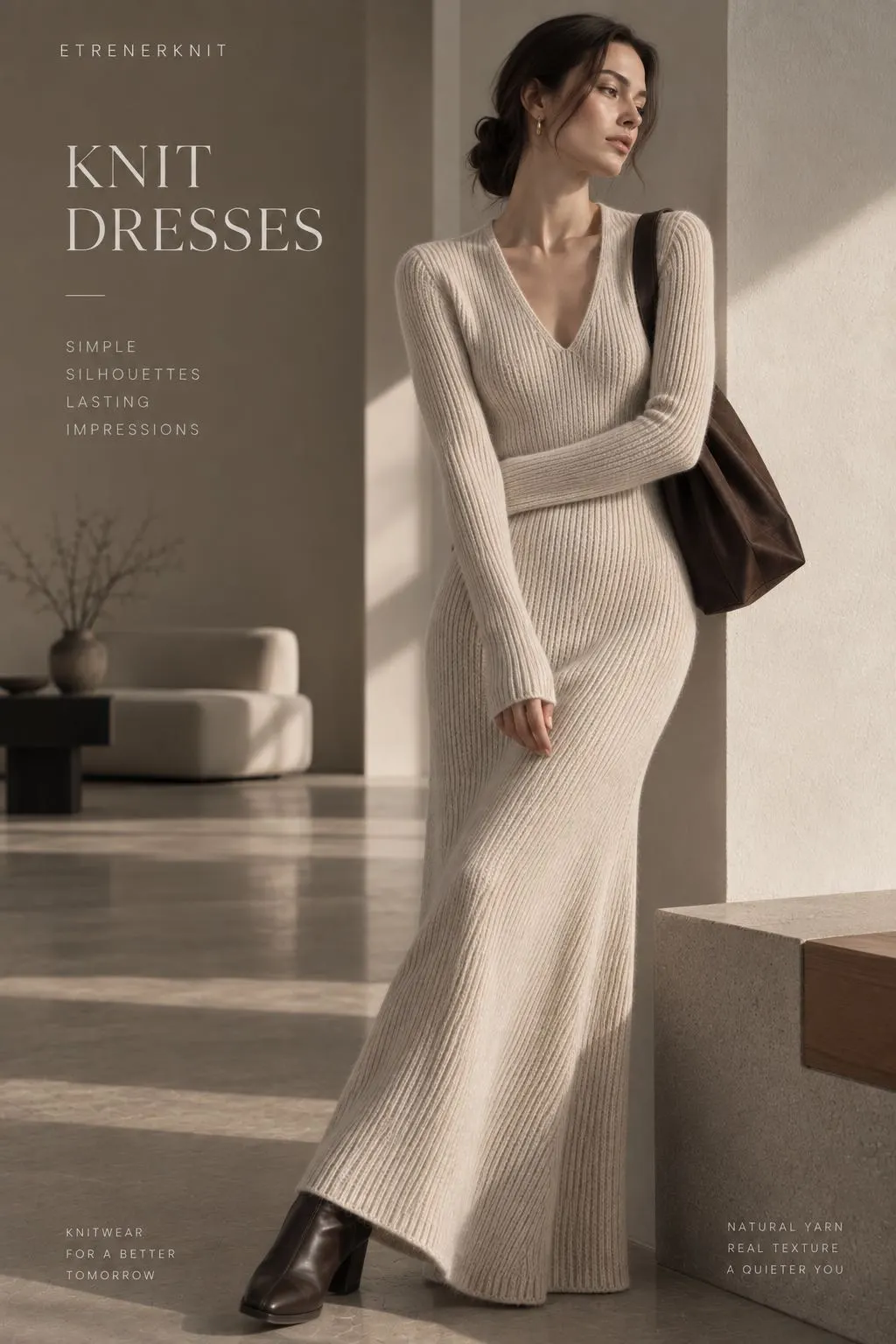
OEM or ODM
for your dress
Both routes lead to the same place, a dress made to your label's specification. The difference is how much of the design you bring with you.
OEM
You send a tech pack, a sketch, a sample or reference photos, and we manufacture the dress to that brief. This route suits brands with a design team or a clear idea of the finished garment.
See manufacturing from your own design and tech pack for how the OEM process works.
ODM
You describe the dress you want, and our design team develops it with you, from concept sketches to a production-ready specification. You then sell the finished dress under your own label.
Learn how the ODM knitwear manufacturer route and private label development work.
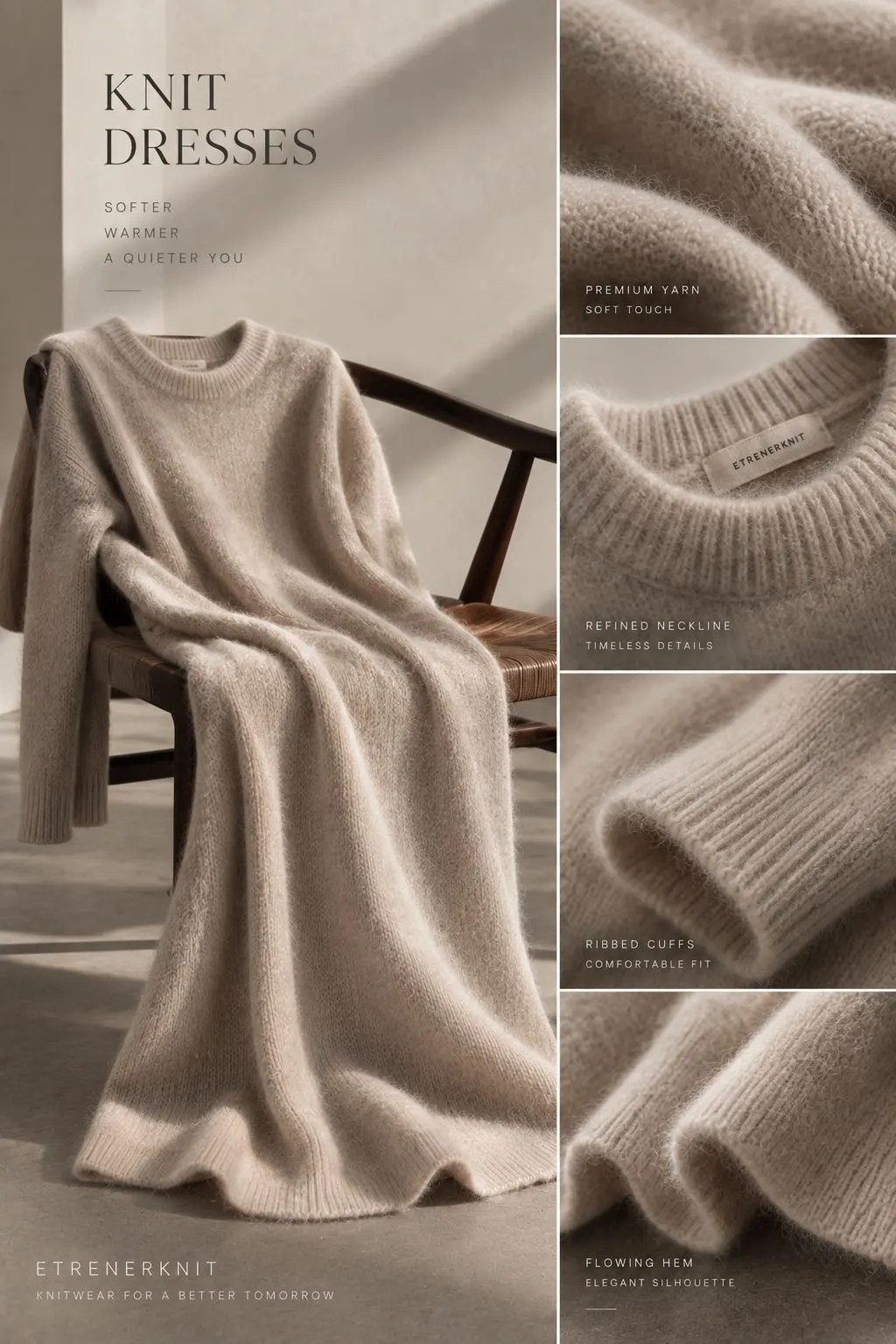
What to check
on a first sample
A sample is your chance to test the dress before bulk production starts. On a knit dress, look closely at these points:
- Fit across the size range, not only the base size
- Hang and length once the dress has been worn or steamed
- Recovery: does it return to shape after stretching?
- Neckline and hem: do they sit flat without curling or flaring?
- Colour and hand-feel against your reference
Our knitwear sampling process page explains how samples are developed and approved.
How to write
a knit dress brief
You do not need a finished tech pack to start. A sketch or a set of reference photos is enough for us to give a useful answer. The more of the following you can include, the fewer rounds of questions you will face.
- The designA tech pack, sketch, sample or reference photos. Mark what matters most: the silhouette, the stitch or the length.
- Size range and fitYour size chart or base size, and whether the dress should be close-fitting, relaxed or oversized.
- Yarn and surfacePreferred fibre, such as wool, merino or a cashmere blend, plus the stitch pattern or swatch you have in mind.
- Quantity and destinationTarget quantity per style and the country you are selling into, so we can advise on the right starting point.
If you already have a tech pack, you can send your design or tech pack for a quote right away.
Starting from
50 pieces per style
Custom knit dresses start at 50 pieces per style. Because the minimum applies per style, a collection with several dress styles is planned style by style.
Timing: on the OEM route, sampling takes 10 days and bulk production takes 25–35 days. On the ODM route, sampling takes 15–20 days and bulk production takes 25–35 days.
We do not list a single price for knit dresses, because the cost depends on yarn, gauge, construction, length, stitch complexity, finishing and quantity. Our guide to what knitwear costs by gauge and yarn explains how those factors combine.
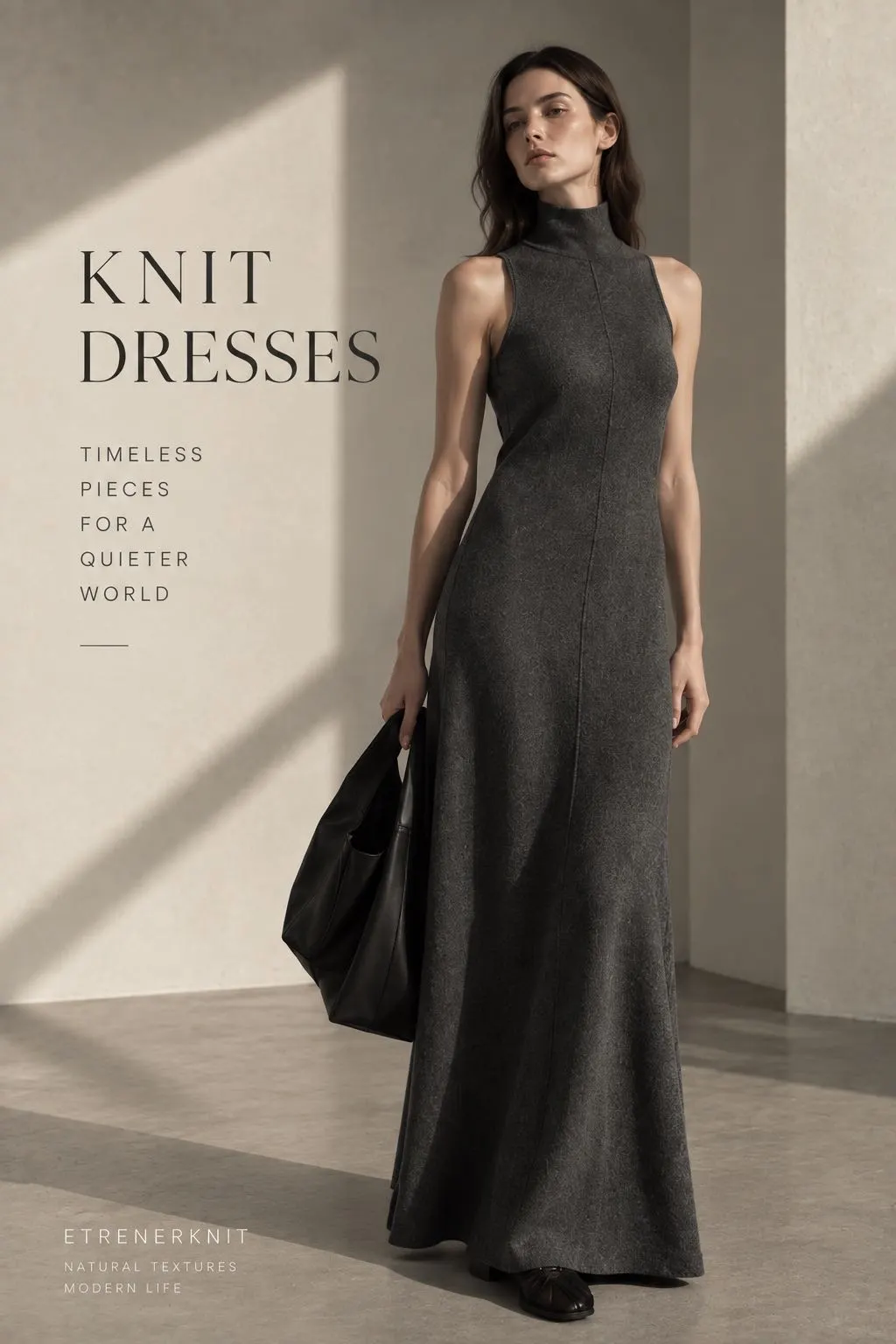
Planning dresses
across a season
Most labels do not launch with a single dress. A practical dress range often mixes a hero style, one or two easier styles that sell in volume, and a seasonal piece such as a sweater dress. Keeping the yarn story consistent across them makes the range look intentional and simplifies sourcing.
Because minimums apply per style, it helps to decide early which styles are core and which are tests. Core styles justify a larger run and a more careful sampling stage; test styles can start at the lowest quantity we quote. If you are unsure how to split your range, describe the whole plan in your brief and we will help you sequence it.
Beyond the dress
related knitwear categories
This page covers single-garment dresses only. If you are planning a wider range, these category pages cover the rest.
- Skirts
Knit skirts for brands that want to sell bottoms on their own or beside a dress range.
knitted skirts in your yarn and fit - Co-ord sets
Matching two-piece sets, ordered and size-matched as a pair rather than as single garments.
custom knit co-ord set manufacturer - Cardigans and sweaters
Outer-layer knits that sit over a dress and share its yarn story.
knit cardigans and sweaters made to order
Knit dress questions
buyers ask first
What is the minimum order for custom knit dresses?
Custom knit dresses start at 50 pieces per style, on both the OEM and ODM routes.
How long do sampling and bulk production take?
On the OEM route, sampling takes 10 days and bulk production takes 25–35 days. On the ODM route, sampling takes 15–20 days and bulk production takes 25–35 days.
What is a seamless knit dress?
A seamless knit dress is knitted as a single piece on the machine, so it has no side seams to sew afterwards. This gives a smooth, close feel. The alternative is fully-fashioned knitting, where shaped panels are knitted and then joined together.
Will a long knit dress lose its shape?
Any long knit carries its own weight and can drop at the hem with wear. How much depends on the yarn, the gauge, the stitch structure and the length. Tell us the target length and fit intent in your brief, and check hang and recovery carefully on the first sample.
Can you develop a dress from a brief if I have no tech pack?
Yes. A sketch or a set of reference photos is enough to start. Through the ODM route, our design team develops the dress with you and prepares the production specification.
Can I send my own design?
Yes. Through the OEM route you send your tech pack, sketch or sample, and we manufacture the dress to your brief. Include your size range, yarn preference and target quantity so we can quote accurately.
Which yarns can knit dresses be made in?
We source wool, merino and cashmere blends, among other fibres. The right choice depends on the season, the look and your price point. The yarn options page lists what is available, and your quote confirms the yarn for your specific style.
How do I choose a gauge for a knit dress?
Gauge is the number of needles per inch on the machine. Finer gauges give a lighter, smoother fabric; lower gauges give a chunkier, heavier one. Choose it by the look and season you want, then confirm it against your yarn. The gauge guide explains the trade-offs.
Ready to start
your dress project?
Share your design, tech pack or reference photos, with the size range, yarn and quantity you have in mind.
send your design or tech pack for a quote