Knitwear design, development and sampling
From brief to approved sample, before a single bulk piece is knitted
The sample is the most important step in any knitwear project. It is where an idea becomes a garment you can hold, wear and judge, and where problems are cheapest to fix. This page explains how we develop and sample women's knitwear, what we need from you and how to approve a sample with confidence.
On the OEM route a sample takes 10 days, and on the ODM route it takes 15–20 days. Bulk production takes 25–35 days on both. Custom orders start at 50 pieces per style.
The sampling stages
from first brief to sign-off
Short answer: you send a brief, we develop or confirm the style, we make a sample, you review it, and we repeat until you approve it in writing. Bulk production starts only after that approval. The table shows what happens at each stage and what you need to provide.
| Stage | What happens | What you provide |
|---|---|---|
| 1. Brief | We review your design or idea and confirm what is practical for the style, yarn and quantity | Tech pack, sketch, reference garment, photos or a description |
| 2. Development | On the ODM route, our design team develops the style with you and prepares the specification. On OEM, we work from yours | Direction on look, yarn, fit and price point |
| 3. Sample | We knit and make a physical sample to the specification | Size chart or base size, colour references |
| 4. Review | You check the sample against the brief and send feedback | Measurements, photos and marked-up comments |
| 5. Approval | You approve the sample in writing, which locks the specification | Written approval, with any final notes |
| 6. Bulk | Bulk production follows the approved sample | Quantities per style and delivery plans |
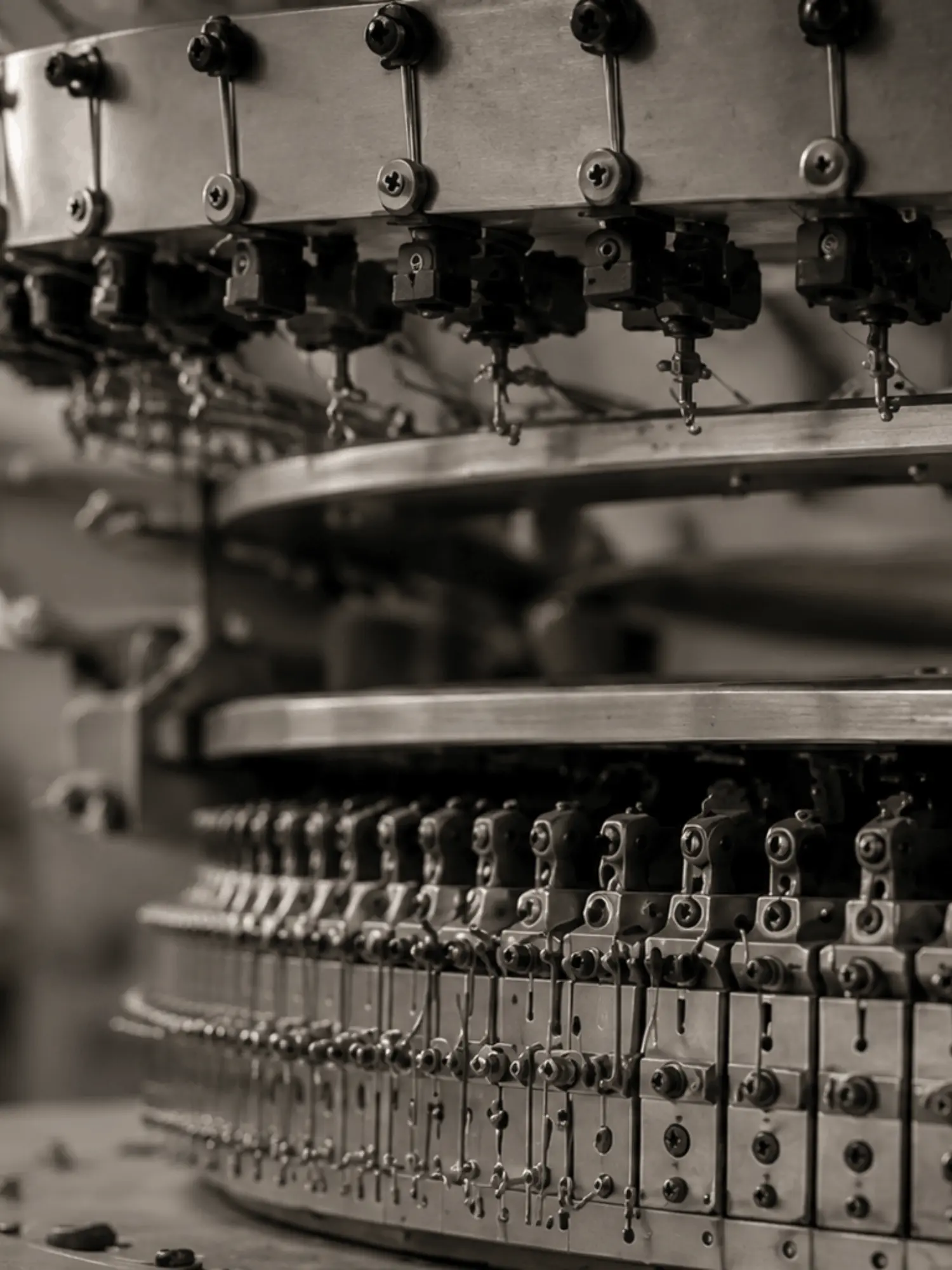
Turning a brief
into a specification
You do not need a finished technical file to start. We work from tech packs, sketches, reference garments, photos, mood boards and written descriptions. The clearer the input, the closer the first sample will be, but a reference photo is enough to begin.
If you already have a design, our manufacturing from your own design and tech pack route lets you specify it directly. If you need help developing one, read about our ODM knitwear manufacturer route.
Inputs we work from
and what each gives us
| Input | What it tells us | Typical route |
|---|---|---|
| Tech pack | Measurements, construction, yarn, gauge, stitch and trims in one document | OEM |
| Sketch or flat drawing | The shape and details of the garment | OEM or ODM |
| Reference garment | Fit, handfeel and weight you want to match | OEM or ODM |
| Photos or a mood board | The look, mood and styling direction | ODM |
| A written description | The idea in your own words, to be developed with you | ODM |
If you are preparing a technical file, read our guide to preparing a tech pack for knit styles.
When we develop
the style with you
On the ODM route, development comes before sampling. Our design team works from your brief to shape the garment, and covers the decisions that make a style ready to knit: silhouette, yarn, stitch, gauge, trims and colour.
You stay in control of direction. Tell us your customer, your price point and what you like and dislike, and we propose how to get there. That conversation is the foundation of the sample, so it is worth spending time on. A sample made from a vague brief usually needs more rounds than one made from a clear one.
- Who the garment is for and where it will be sold
- The price point, because it limits yarn and construction choices
- References you like, and ones you do not
- Fit preference: fitted, relaxed or oversized
- Season, which guides yarn weight and gauge
What a sample
is for
A sample is not a finished product to admire. It is a test. Its job is to show you whether the design, yarn, fit and finish work before you commit to a quantity. A sample that reveals problems has done its job.
That is why it is worth reviewing in detail, on a body, and across the size range if you can. The yarn and gauge you choose decide how it drapes and feels, so see the yarns we knit with and the guide to how gauge changes the look, feel and cost when you review it.
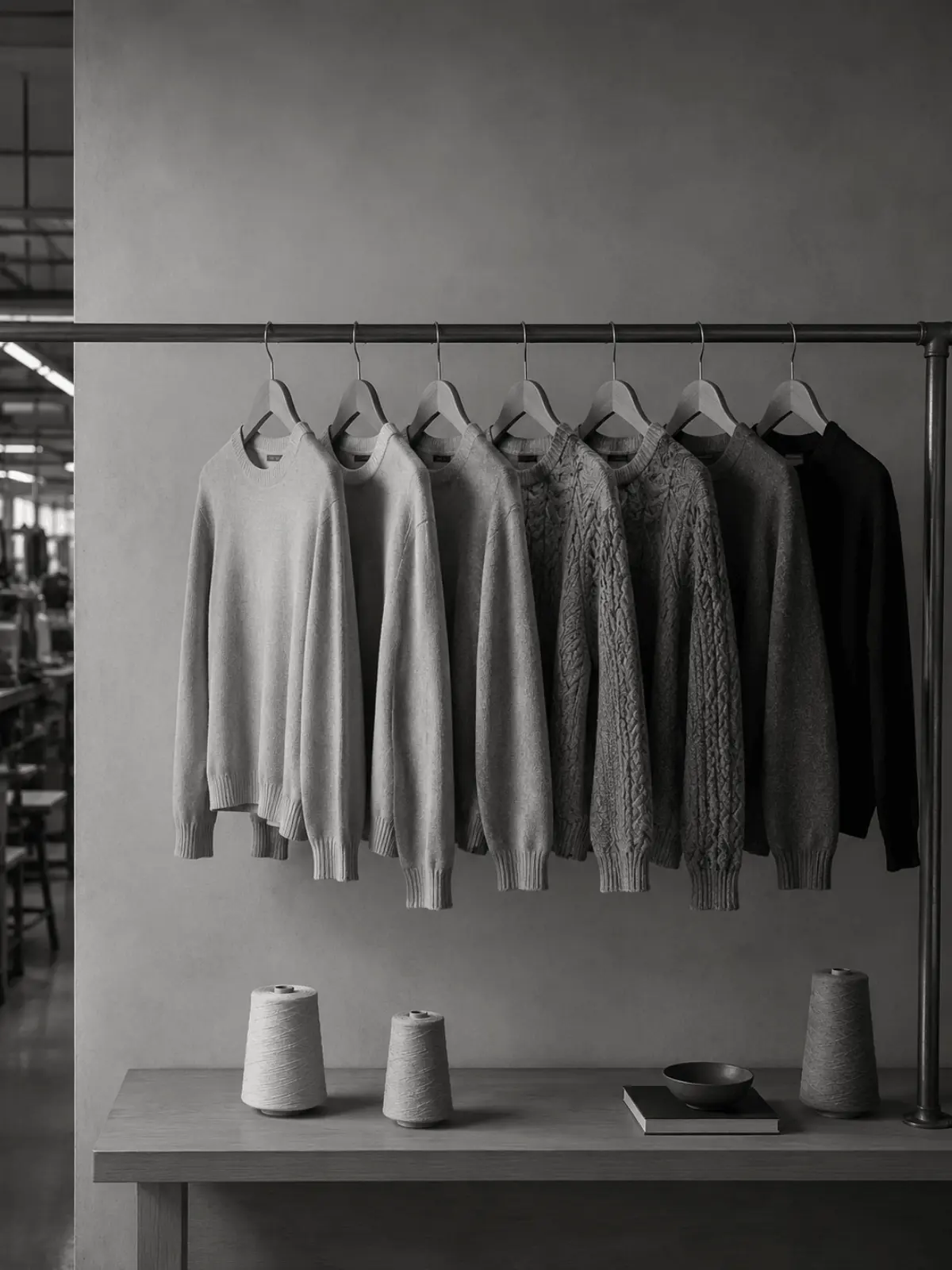
What to check
before you approve
Review the sample against your brief, point by point. This checklist covers what to look at on a typical knitwear sample.
- Measurements against your specification, at every point of measure
- Fit on a body, including how it sits when you move and sit down
- Handfeel, weight and drape compared with your reference
- Colour in daylight, not only on a screen
- Stitch pattern, scale and placement
- Neckline, cuff and hem recovery after stretching
- Trims, buttons and labels, including their position
- Dimensions after washing, because knits can relax or shrink
Do not forget the label. Decide the care wording at sampling, not at the end. ISO publishes a standard for care labelling using symbols, and labelling rules differ by market. In Great Britain, for example, GOV.UK says the label must show the fibre content. Check the rules for your own market before you finalise labels.
How to give feedback
that gets results
Good feedback is specific and visual. It says what is wrong, where, and what you want instead. The more precise it is, the fewer rounds you need.
Specific and visual
"The sleeve is 2 cm too long at the cuff, see the marked photo. Please match the measurement on the spec." Measurements, marked-up photos and a clear instruction.
Vague
"It does not feel right." Without a location or a reference, we have to guess what to change, which costs a round.
When the sample is right, approve it in writing. That approval is what bulk production follows, so it should record any final notes. We agree how many revision rounds your style needs when we confirm your brief, rather than promising a fixed number for every garment.
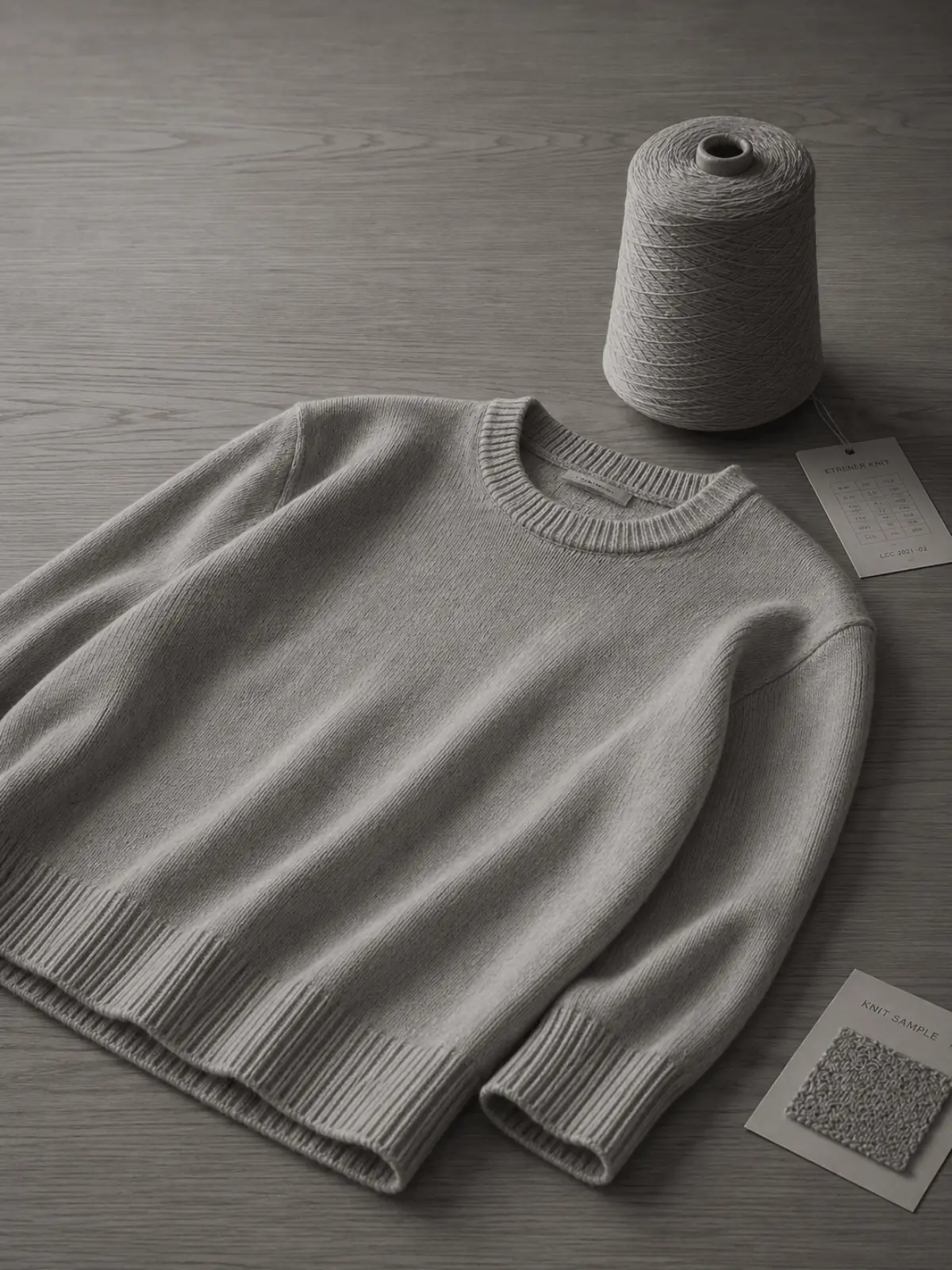
Judge it
on a body
Knitwear changes shape on the body. A garment that looks right flat can drape differently when worn, because knit stretches and relaxes. Always judge fit and drape on a person or a fit model, not only on a table.
Digital prototypes can help early decisions about colour and yarn. Shima Seiki, the machine maker, describes digital prototypes of knitted goods as close to actual products, not identical to them. They do not replace a physical sample for fit and handfeel.
How long it takes
and what it depends on
| Route | Sample | Bulk production | Minimum |
|---|---|---|---|
| OEM | 10 days | 25–35 days | 50 pcs per style |
| ODM | 15–20 days | 25–35 days | 50 pcs per style |
Revisions add time, so a clear brief and fast feedback save the most. Read how the whole project fits together on the knitwear MOQ and cooperation process page, and see knitwear lead time and shipping for what happens after production.
From sample
to bulk and packaging
Once the sample is approved, bulk production follows it. This is also the moment to settle the finishing: labels, hang tags and packaging. If you are building a brand, see our guide to private label knitwear packaging so the presentation matches the garment.
Do not change the yarn, colour or construction after approval. Even a small change can alter the handfeel or the fit, and the approved sample is the standard your bulk goods will be compared with.
What to focus on
for different knitwear styles
Different garments fail in different places, so the review should follow the style. Use this as a starting point and add your own points of measure.
| Style | Look hardest at | Why it matters |
|---|---|---|
| Sweaters and cardigans | Shoulder line, sleeve length, rib recovery, front band and button spacing | Small errors in these areas change how the whole garment hangs |
| Knit dresses | Length, drape over hips, hem behaviour and neckline stability | Weight and stretch can pull a long garment out of shape |
| Knit tops | Body width, neckline recovery and hem curl | Light fabrics show every inconsistency |
| Skirts and pants | Waistband stretch and recovery, rise, hip fit and seat | Bottoms bear more strain, so shape retention matters |
| Co-ord sets | Colour and handfeel match between pieces, and the fit of each piece | Two pieces must look like they belong together |
Which sampling route
fits your project
The route depends on how much of the design you already have. It also sets the sample time, which is why it is worth deciding early.
You have the design
You supply a tech pack, sketch or reference garment and we make it to your specification. The sample takes 10 days, and orders start at 50 pieces per style.
You want help developing it
We develop the style with you from a brief, then sample it. The sample takes 15–20 days because development comes first. Orders also start at 50 pieces per style.
Many buyers mix the two. They bring one hero style they have designed and ask us to develop the rest of the range around it. Either way, the sample is approved the same way: in writing, before bulk.
Sampling mistakes
that cost time
- Starting with a vague brief. Missing yarn, fit or price information leads to extra rounds.
- Reviewing only the base size. Check at least the smallest and largest sizes in your range.
- Judging colour on a screen. Compare against a physical reference in daylight.
- Leaving labels to the end. Care wording and fibre content should be decided at sampling.
- Approving with open doubts. If something is unclear, ask for another sample.
- Changing the design after approval. It resets the clock and the cost.
Sampling questions
buyers ask first
How long does a sample take?
On the OEM route, a sample takes 10 days. On the ODM route, a sample takes 15–20 days.
How long does bulk production take?
Bulk production takes 25–35 days on both the OEM and ODM routes.
What is the minimum order?
Custom OEM and ODM orders start at 50 pieces per style.
Do I need a tech pack to start?
No. A sketch, reference garment, photos or a written description is enough to begin. A tech pack makes the first sample more accurate.
Can you develop a design from a reference photo?
Yes. Through the ODM route, our design team develops the style with you and prepares the specification for sampling.
How many sample revisions can I have?
We agree the revision plan for your style when we confirm the brief, because it depends on the complexity of the design. A clear brief and specific feedback reduce the number of rounds needed.
What should I check on a sample?
Measurements, fit on a body, handfeel and drape, colour, stitch pattern, trims and labels, neckline and cuff recovery, and dimensions after washing.
Does bulk production start before I approve the sample?
No. Bulk production follows the sample you approve in writing.
Ready to start
your sampling?
Send your design, tech pack or reference photos, with the size range, yarn and quantity you have in mind, and we will tell you how we would sample it.
get a quote