Knit skirt manufacturer
Custom women's knit skirts, made in Guangzhou
EtrenerKnit develops and manufactures women's knit skirts for fashion labels and wholesale buyers. Skirts are developed and made to order for your brand, either from your own design (OEM) or built with our team (ODM). Custom skirt orders start at 50 pieces per style.
This page covers the skirt shapes we work with, the waistband and fit decisions that matter most on a knit skirt, how to write a brief and what to check on a sample.
Knit skirt styles
for every kind of range
Short answer: we work on knit skirts in pencil, A-line, pleated, rib and slip shapes, from mini to maxi length. The list below is a starting point. If your skirt is not listed, describe it in your brief.
- Fitted
Pencil and fitted skirts
Close-fitting skirts that follow the body. Stretch, recovery and waistband comfort decide whether they sell.
- Flared
A-line and pleated skirts
Skirts that move. Pleats and flare add shape, and they put more demands on the way the knit hangs.
- Texture-led
Rib knit skirts
Rib structures stretch and recover well, so they suit fitted and semi-fitted skirts with clear vertical texture.
- Length-led
Midi and maxi skirts
Longer skirts, where weight and drop matter. The heavier the knit, the more the hem pulls downward.
- Short
Mini knit skirts
Shorter skirts for younger or warm-weather ranges, where fit through the hip and the waistband matter most.
- Fluid
Slip-style knit skirts
Softer, more fluid skirts in finer knits that skim the body rather than grip it.
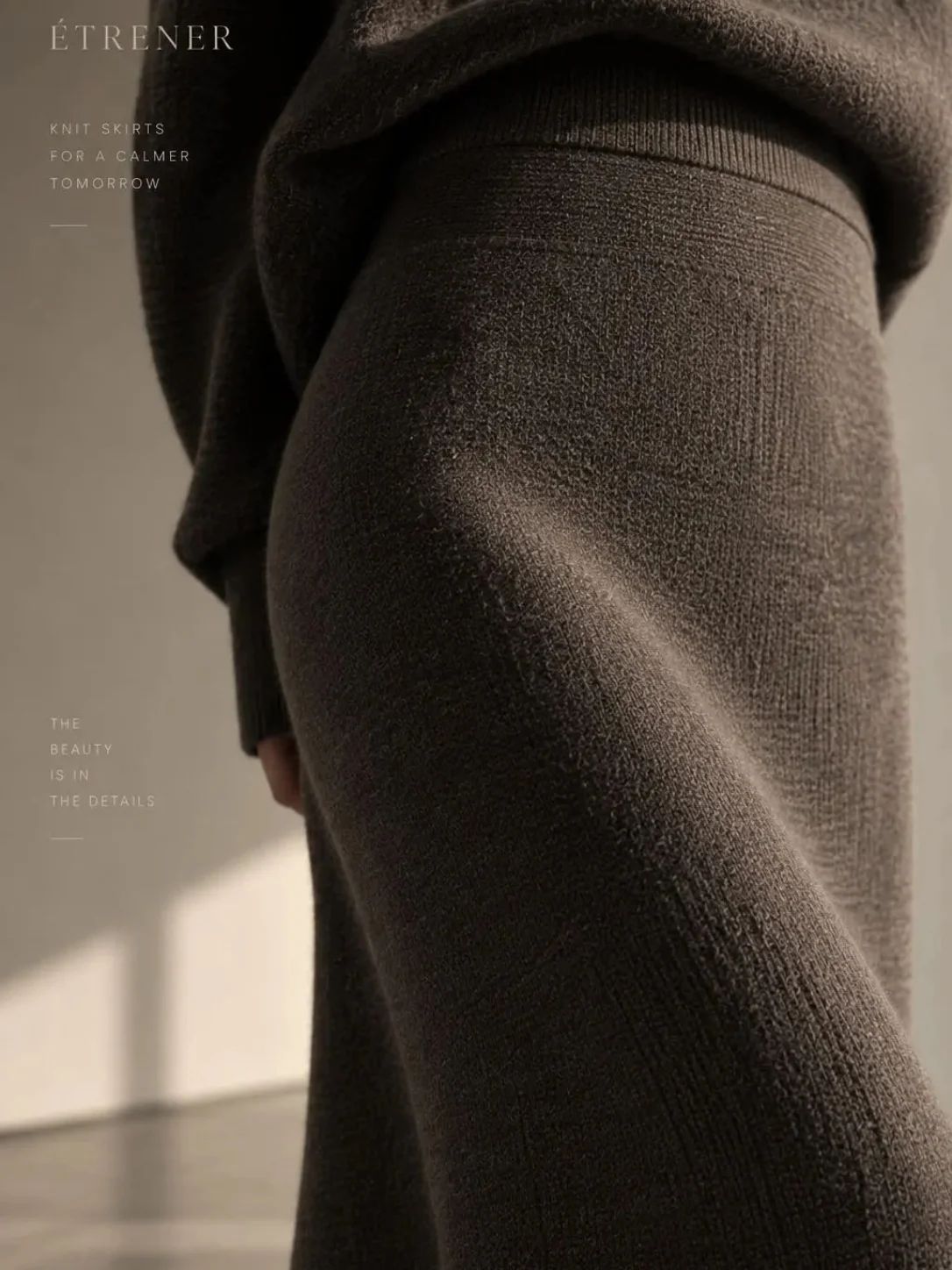
Developed for
your label, not off the rack
Custom knit skirts are not stock items. Each style is developed around your brief, so the shape, yarn, stitch and waistband reflect what your customer expects from your label.
Skirts are made at our factory in Guangzhou, with more than 100 Shima Seiki units and 1,000 skilled workers. A skirt looks simple, but it is one of the most exacting knit categories: it has to stay up, stay in shape and look the same after a day of sitting. The sections below cover the choices that decide that.
Choosing a waistband
for a knit skirt
Short answer: the waistband is the part of a knit skirt that customers feel first and that fails first. It has to hold the skirt in place without digging in, and it has to recover after stretching. Settle it before you finalise the rest of the design.
| Waistband type | How it behaves | Typically suits |
|---|---|---|
| Fold-over rib | A soft, wide knit band that folds down and sits flat. It is comfortable and has no hard edges. | Relaxed and rib skirts where comfort is the priority |
| Covered elastic | Elastic enclosed in the knit, which grips more firmly and holds the skirt in place. | Fitted and pencil skirts that need to stay put |
| Drawcord | An adjustable cord that lets the wearer set the fit, at the cost of a casual look. | Relaxed, casual or sporty styles |
| Zip or button closure | A fastening that gives a more tailored finish and a defined waist. | Structured skirts with a tailored look |
Which waistband is practical depends on the style and yarn. We confirm it for your skirt once we have reviewed your brief.
What shapes
how a knit skirt fits and hangs
Knit skirts fail in predictable ways: they bag at the seat, ride up, lose their pleats or show through in light colours. Most of these problems are decided in the brief, so specify the following up front.
| Decision | Why it matters | What to tell us |
|---|---|---|
| Seat stretch and recovery | Knit stretches when worn and sat in. How well it springs back depends on the stitch structure and yarn. | Fit intent, and whether the skirt should hold or relax |
| Length and weight | A longer or heavier knit drops more at the hem and can pull the waistband down. | Target length per size and how heavy the skirt should feel |
| Pleats and flare | Pleats in knit can be built into the stitch structure rather than pressed in. The method decides how crisp and how lasting they are. | A reference photo of the pleat or flare you want |
| Stitch pattern | Rib, pointelle, cable and jacquard stitches each change the look, thickness and stretch of the fabric. | A swatch or photo of the surface you want |
| Opacity and lining | Fine knits and light colours can show through, especially when the skirt stretches over the hips. | Whether you want the skirt lined, and in which colours |
| Hem finish | An unfinished knit hem can curl. A band or rib hem sits flat and adds weight. | The hem treatment you prefer |
A skirt rarely
sells alone
Many brands pair a knit skirt with a matching top in the same yarn and colour. If you want to sell the two as one outfit, read about developing matching knit sets for your label, which covers how two-piece sets are ordered and size-matched.
If you want to develop the top separately, the women's knit top manufacturer page covers neckline, fit and fibre choices for lighter tops.
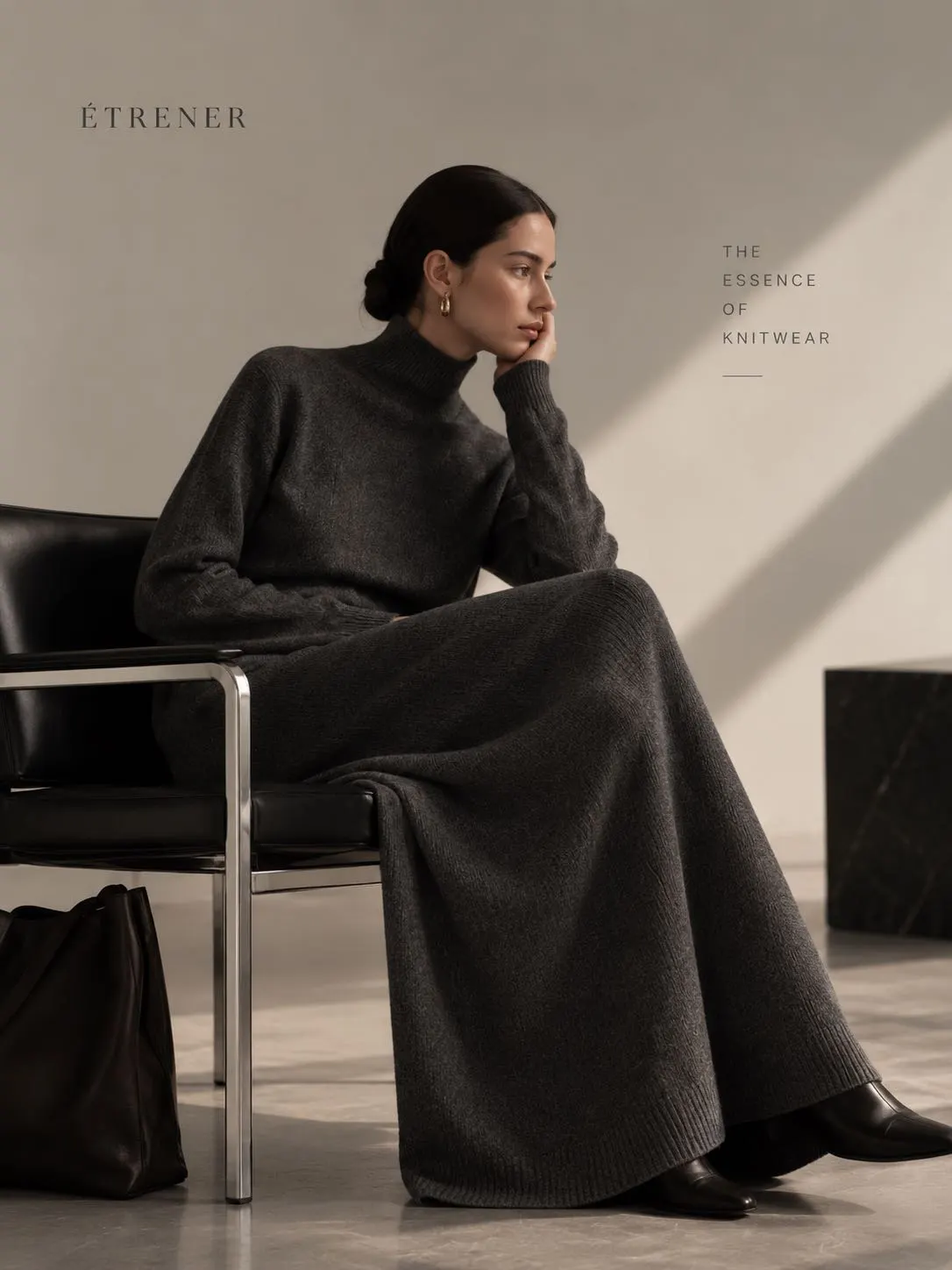
Two choices that set
the drape of the skirt
Yarn decides warmth, softness, weight and a large part of the price. On a skirt, weight matters because it drives how the hem and waistband behave. Browse the yarns we knit with before you choose a fibre.
Gauge is the number of needles per inch on the knitting machine, written as GG. A higher gauge means a finer, lighter fabric, while a lower gauge gives a chunkier, heavier one. Finer knits drape and skim; heavier ones hold structure and pleats better. Read the knitting gauge guide to see how gauge changes the look, feel and cost.
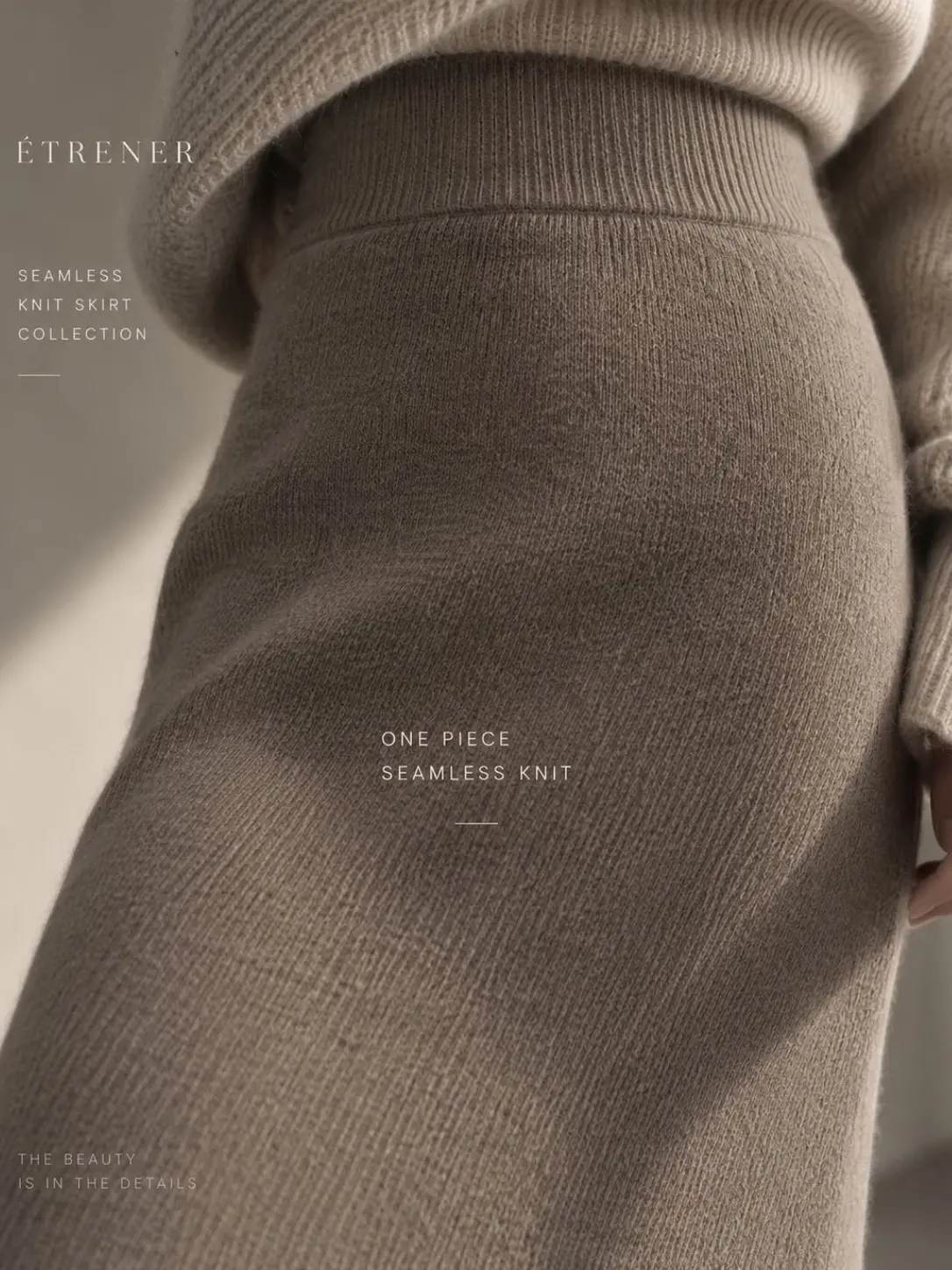
One piece
or shaped panels
A knit skirt is made either in one piece, with no side seams to sew (seamless, or whole-garment, knitting), or as shaped panels that are knitted to size and then joined (fully-fashioned). One-piece construction gives a smooth finish against the body. Panels allow cleaner tailoring and shaping.
Which method suits your skirt depends on the shape, yarn and gauge, so we confirm it for each style rather than promising one method for every design.
OEM or ODM
for your skirt
OEM
You send a tech pack, a sketch, a sample or reference photos, and we manufacture the skirt to your brief. Sampling takes 10 days and bulk production takes 25–35 days.
ODM
You describe the skirt you want, and our design team develops styles for your label, from concept sketches to a production-ready specification. Sampling takes 15–20 days and bulk production takes 25–35 days.
How to write
a knit skirt brief
You do not need a finished tech pack to start. A sketch or a set of reference photos is enough for us to give a useful answer.
- The designA tech pack, sketch, sample or reference photos. Mark the length, shape and waistband you care about most.
- Size range and fitYour size chart or base size, and whether the skirt should be close-fitting, relaxed or flared.
- Yarn and surfacePreferred fibre, the handfeel you want, and the stitch pattern or swatch you have in mind.
- Quantity and destinationTarget quantity per style and the country you are selling into.
Ready to go? Request a knitwear quote with your sketches or tech pack.
What to check
on a first skirt sample
A sample is your chance to test the skirt before bulk production. Look closely at these points:
- Waistband comfort and grip: does it hold without digging in?
- Seat recovery: wear it, sit in it, then check that it springs back
- Hang and length once the skirt has been worn and steamed
- Pleats or flare: do they keep their shape?
- Fit across the size range, not only the base size
- Dimensions after washing, because knits can relax or shrink
For the washing check, it helps to follow a recognised method. ISO 6330 on domestic washing and drying procedures for textile testing describes how textiles are washed and dried for testing, so that results can be compared fairly. For wool knits, Woolmark advises folding wool knitwear rather than hanging it, since hanging lets the garment stretch under its own weight.
Starting from
50 pieces per style
Custom knit skirts start at 50 pieces per style, on both the OEM and ODM routes. Because the minimum applies per style, a collection with several skirt shapes is planned style by style.
We do not list a single price for knit skirts, because the cost depends on yarn, gauge, construction, length, stitch complexity, waistband and quantity.
Planning skirts
inside a wider range
Skirts work hardest as part of a range. A practical skirt line often pairs one easy, reliable shape, such as a rib midi, with a more distinctive piece, such as a pleated A-line, in the same yarn story. That gives customers a safe first purchase and a reason to come back.
Think about how each skirt will be styled. A skirt that only works with one top is harder to sell than one that works with several, so check that the length, rise and waistband suit the tops in your range. If you are also developing dresses, knit dresses made to your design share many of the same yarn and fit decisions, so developing them together can save sampling rounds. The same goes for bottoms: knit pants and trousers made to order can be built in the same yarn as your skirts.
Knit skirt questions
buyers ask first
What is the minimum order for custom knit skirts?
Custom knit skirts start at 50 pieces per style, on both the OEM and ODM routes.
How long do sampling and bulk production take?
On the OEM route, sampling takes 10 days and bulk production takes 25–35 days. On the ODM route, sampling takes 15–20 days and bulk production takes 25–35 days.
Why do knit skirts bag at the seat?
Knit stretches when worn and sat in, and some structures do not spring back fully. How much depends on the stitch structure, the yarn and the fit. Tell us your fit intent in the brief, and test seat recovery on the first sample by wearing it and sitting in it.
Can a knit skirt be lined?
Lining is something to decide in the brief, particularly for fine knits and light colours that can show through. Tell us whether you want a lined skirt, and we will confirm what is practical for the style.
Which waistband is best for a knit skirt?
It depends on the skirt. A fold-over rib is comfortable and relaxed, covered elastic holds fitted skirts in place, a drawcord suits casual styles, and a zip or button gives a tailored finish. Tell us the look you want and we will advise.
Can you make a matching top for my skirt?
Yes. You can develop a matching top in the same yarn and colour. If you want to sell the two as one outfit, the co-ord set page explains how two-piece sets are ordered and size-matched.
Can I send my own design?
Yes. Through the OEM route you send your tech pack, sketch or sample, and we manufacture the skirt to your brief. Include your size range, yarn preference and target quantity so we can quote accurately.
Can you develop a skirt if I only have a reference photo?
Yes. A reference photo is enough to start. Through the ODM route, our design team develops the skirt with you and prepares the production specification.
Ready to start
your skirt project?
Share your design, tech pack or reference photos, with the size range, yarn and quantity you have in mind.
request a knitwear quote