Women's knit top manufacturer
Custom knit tops, tees and layering pieces, made in Guangzhou
EtrenerKnit develops and manufactures women's knit tops for fashion labels and wholesale buyers. Tops are developed and made to order for your brand, either from your own design (OEM) or built with our team (ODM). Custom top orders start at 50 pieces per style, confirmed in your quote.
This page covers the top styles we work with, the decisions that change how a knit top fits and wears, which fibres suit which jobs, how to write a brief and what to check on a sample.
Knit top styles
for every layer of the range
Short answer: we work on knit tops with crew, V, mock and turtle necks, polo collars, and sleeveless and short-sleeve shapes. This page is about the lighter end of knitwear: tops, tees and layering pieces. Heavier cardigans and sweaters have their own category, linked further down.
- Everyday
Crew-neck knit tops
The easiest shape to sell and the most reliable repeat style. A rib or plain knit crew neck works as a base layer or a stand-alone piece.
- Neckline-led
V-neck knit tops
A more open neckline that layers well under blazers and over shirts. Edge finishing at the V decides how clean the top looks.
- Layering
Turtleneck and mock-neck tops
Fitted high necks for under jackets, dresses and pinafores. The neck has to stretch over the head and still sit comfortably.
- Warm-weather
Tank and sleeveless tops
Sleeveless knits for spring and summer, or for layering under a cardigan. Armhole and neckline edges do most of the work.
- Short sleeve
Short-sleeve knit tops and tees
Lighter knits with short sleeves that bridge seasons, from fitted tees to relaxed shapes.
- Detail-led
Polo-collar knit tops
A collar and placket add structure to a knit top, for labels aiming at a smarter, more tailored look.
Tops are the
workhorses of a knit range
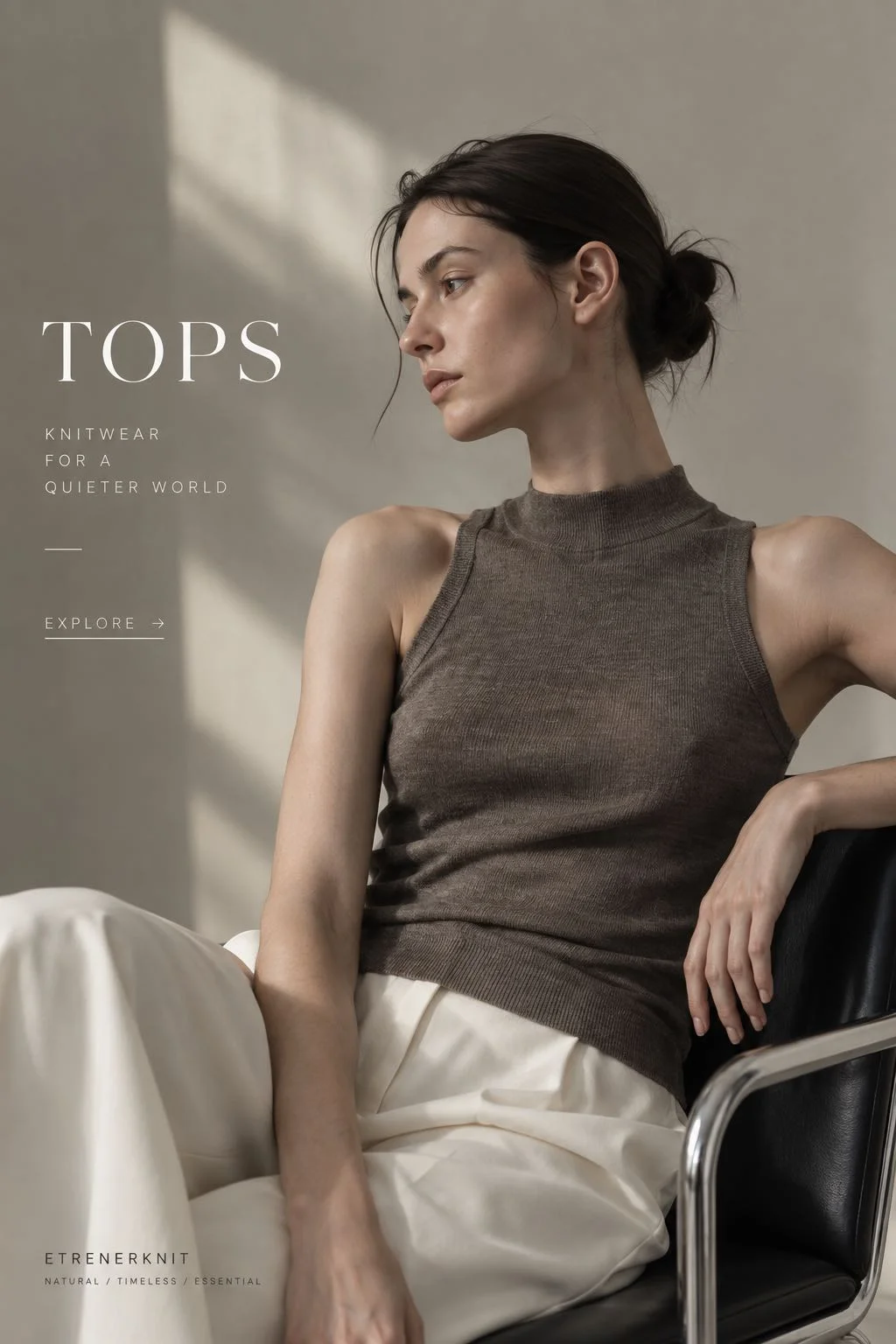
In most women's knitwear collections, tops carry the volume. They are the pieces a customer buys first, wears most and orders again in a new colour. That makes them a sensible starting point for a new label, and a place where small details matter: a neckline that rolls or a hem that curls will show up in customer reviews quickly.
Our tops are made at our factory in Guangzhou, with more than 100 Shima Seiki units and 1,000 skilled workers. They are developed and made to order for your brand. We work from your brief, so the neckline, sleeve, length, yarn and finish reflect your customer rather than a generic block.
What shapes
how a knit top fits and wears
Knit tops are simple garments, which is exactly why small decisions show. Settling the following in the brief saves rounds of sampling later.
| Decision | Why it matters | What to tell us |
|---|---|---|
| Neckline and edge finish | Necklines have to stretch over the head and spring back. A poorly finished edge rolls, gapes or flares after a few wears. | Neckline shape and depth, and a reference photo of the edge you want |
| Sleeves and armholes | On tank and short-sleeve tops, the armhole and sleeve edge decide comfort and neatness. | Sleeve length, armhole depth and whether you want a bound or folded edge |
| Length and hem | Cropped, regular and longline tops sit differently, and plain knit hems can curl without a rib or band. | Target length per size and the hem finish you prefer |
| Fit and stretch | Rib and plain knit stretch differently. A rib fits closely and recovers well; a plain knit drapes more. | Close-fitting, regular or relaxed, with a reference garment if possible |
| Weight and opacity | Fine knits in light colours can show through. Weight also decides whether a top layers well or feels bulky. | Desired handfeel, the colours you plan to offer and any layering use |
| Colours | A top often sells in several colours. Colour matching to a reference needs sampling in the actual yarn. | Colour references and how many colours you plan per style |
Stitch type matters for fit: rib and plain knit are built differently and behave differently. Britannica's overview of weft knitting describes how they are formed.
Fine, light and
comfortable against the skin
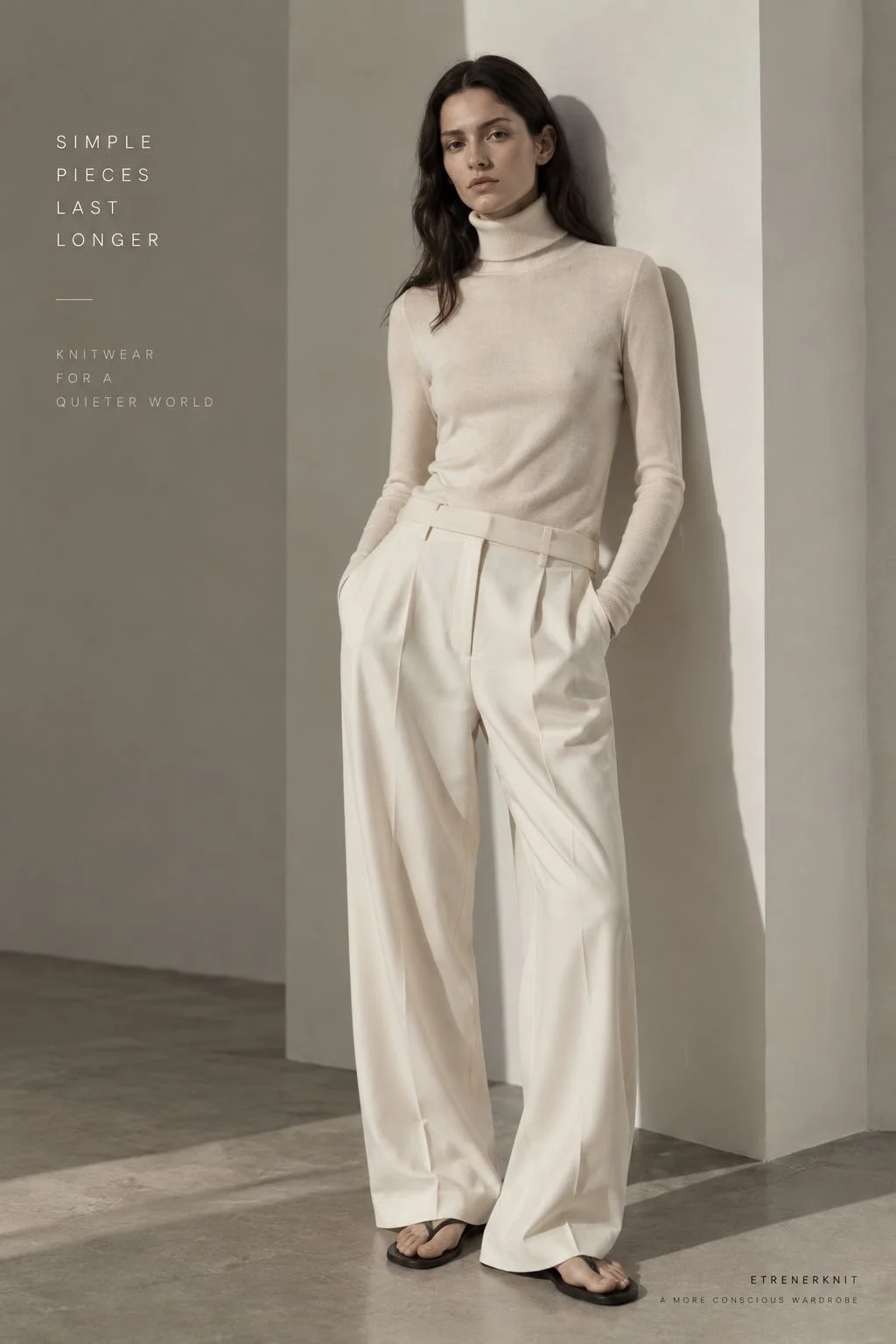
Tops are often worn next to the skin, so the yarn and the gauge matter more than they do on an outer layer. Gauge is the number of needles per inch on the knitting machine, written as GG. A higher gauge means a finer, lighter fabric, which is why lighter tops and tees are typically knitted finer than heavy sweaters.
Read the knitting gauge guide to see how gauge changes the look, feel and cost of a top, and browse the yarns we knit with before you choose a fibre.
Which fibre
for which kind of top?
Short answer: choose the fibre by how the top will be worn. The table gives general guidance on common fibres. The actual yarn for your style is agreed once we have your brief and the target price.
| Fibre | Typical handfeel | Where it works in tops |
|---|---|---|
| Merino wool | Soft, fine and light for a wool | Base layers, rib tops and turtlenecks for cooler seasons |
| Cashmere blend | Very soft, a more luxurious feel | Premium tops where handfeel is the selling point |
| Cotton | Cool, breathable and matte | Spring and summer tops, tanks and short-sleeve styles |
| Blends | Depends on the mix | Balancing cost, durability and stretch for volume styles |
General guidance only. Fibre availability and suitability for a specific style are confirmed in your quote. For more on merino, see Woolmark's guide to merino wool.
One style,
several colours
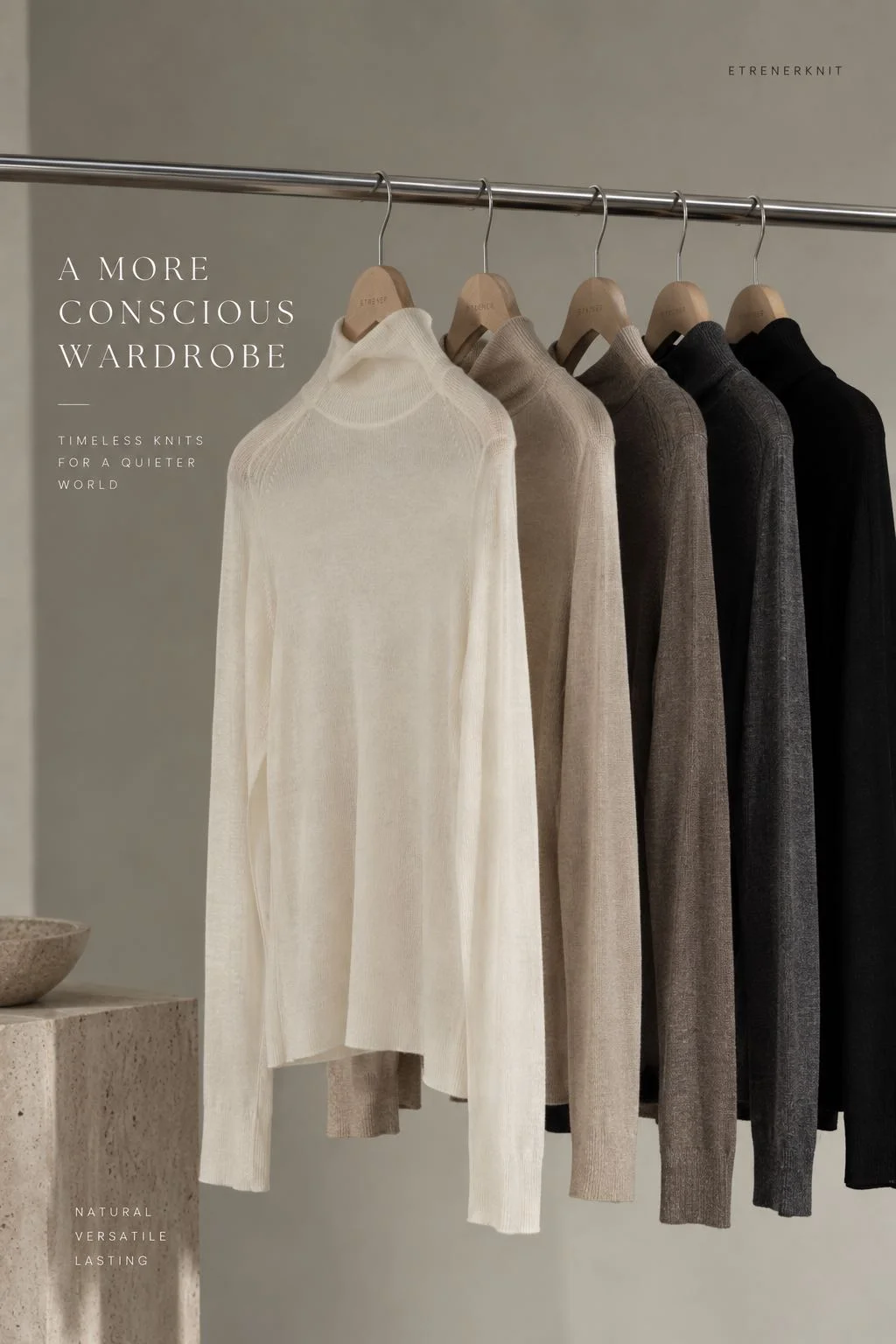
A knit top rarely launches in one colour. The same style in a handful of colours gives customers a reason to buy twice, and gives you flexibility to reorder what sells.
When you plan colourways, share colour references early. Colour is judged on the knitted yarn rather than on a screen, so it is confirmed during sampling. Tell us how many colours you plan per style, and we will explain how minimums apply to them in your quote.
Starting from
your own design or a brief
Many labels already have a block they love for tops: a neckline, a fit, a length. If that is you, see how we work as an OEM knitwear manufacturer. If you only have a reference photo or an idea, send that instead and tell us you would like help developing it.
Either way, custom tops start at 50 pieces per style. On the OEM route, sampling takes 10 days and bulk production takes 25–35 days. On the ODM route, sampling takes 15–20 days and bulk production takes 25–35 days. We do not list a single price for knit tops, because the cost depends on fibre, gauge, construction and quantity.
How to write
a knit top brief
You do not need a finished tech pack to ask a question. A sketch, a reference photo or a garment you want to match is enough to start.
- The designA tech pack, sketch, sample or reference photos. Note the neckline, sleeve and length you care about most.
- Size range and fitYour size chart or base size, and whether the top should be close-fitting, regular or relaxed.
- Yarn and coloursPreferred fibre, the handfeel you want and the colours you plan, with references where possible.
- Quantity and destinationTarget quantity per style and the country you are selling into.
Ready to go? Send your design or tech pack for a quote.
What to check
on a first sample
A sample is your chance to test the top before bulk production. On a knit top, look closely at these points:
- Neckline: does it stretch over the head and spring back?
- Hem and cuffs: do they sit flat, or curl and flare?
- Fit across the size range, not only the base size
- Dimensions after washing, because knits can relax or shrink
- Colour and handfeel against your reference
Planning tops
across a season
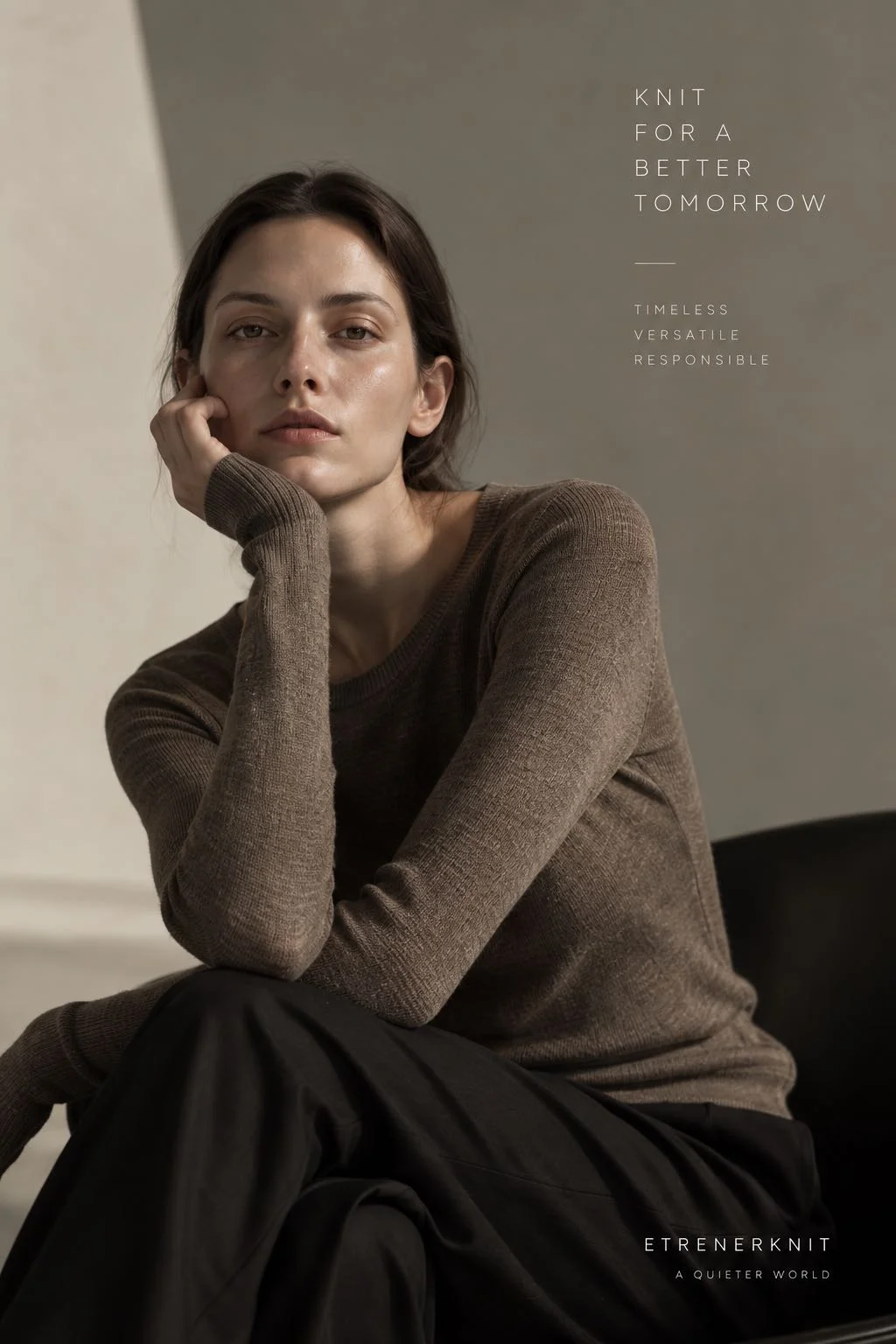
A practical top range usually has three jobs to do. A small group of core styles, such as a crew neck and a turtleneck in staple colours, carries the volume and gets reordered. A few fashion styles, with a distinctive neckline or collar, give the range a point of view. Seasonal pieces, like a sleeveless tank for spring, extend the range into warmer months.
Because minimums apply per style, it helps to decide early which styles are core and which are tests. Core styles justify a larger run and a careful sampling stage. Test styles can start at the lowest quantity we quote, and you can reorder the ones that sell.
Fit blocks deserve the same attention. If several tops share the same body shape, sampling is faster and the range fits consistently across styles. Send us a garment you already like, with its measurements, and we can use it as the starting reference for the whole group.
Beyond the top
related knitwear categories
This page covers lighter tops and tees. Heavier outer layers, bottoms and one-piece styles are covered on their own pages.
- Dresses
Single-garment knit dresses, for ranges that pair tops with a dress story.
knit dresses made to your design - Skirts
Knit skirts that sit beside your tops in the same yarn and colours.
custom knitted skirt manufacturer - Pants
Knit bottoms for brands building a head-to-toe knit look.
knit pants and trousers made to order - Co-ord sets
Matching two-piece sets, ordered and size-matched as a pair.
matching knit sets for your label - Cardigans and sweaters
Heavier outer-layer knits that sit over your tops.
women's cardigan and sweater manufacturer
Knit top questions
buyers ask first
What is the minimum order for custom knit tops?
Custom knit tops start at 50 pieces per style, on both the OEM and ODM routes.
How long do sampling and bulk production take?
On the OEM route, sampling takes 10 days and bulk production takes 25–35 days. On the ODM route, sampling takes 15–20 days and bulk production takes 25–35 days.
What is the difference between knit tops and sweaters?
On this site, knit tops are the lighter pieces: tops, tees, tanks and layering knits, typically in finer gauges. Cardigans, pullovers and heavier sweaters are outer-layer knits and have their own category page.
Can you develop a top from a reference photo?
Yes. A sketch or reference photo is enough to start. Tell us the neckline, length, fit and yarn you have in mind, and we will advise on how to develop it into a production-ready specification.
Can I send my own design?
Yes. Through the OEM route you send your tech pack, sketch or sample, and we manufacture the top to your brief. Include your size range, yarn preference and target quantity so we can quote accurately.
What is a seamless knit top?
A seamless knit top is knitted as a single piece on the machine, so it has no side seams to sew afterwards. This gives a smooth feel against the skin. The alternative is fully-fashioned knitting, where shaped panels are knitted and then joined. Shima Seiki's page on WHOLEGARMENT knitting gives a machine maker's explanation of seam-free knitting.
How do I stop a knit neckline from stretching out?
Neckline stability comes from the yarn, the stitch structure and the finishing of the edge. Tell us how snug you want the neck, and test it on the first sample by pulling it over the head several times and checking that it recovers.
Can I order the same top in several colours?
Yes, you can describe several colours for one style in your brief. How minimums apply to colourways depends on the yarn and the style, so we confirm it in your quote.
Ready to start
your top project?
Share your design, tech pack or reference photos, with the size range, yarn and quantity you have in mind.
send your design or tech pack for a quote